Marketplace Facilitator (MPF) Taxes
Context
Marketplace Facilitator Taxes (also MPF Taxes or just MPF, in short) is a term used in the US market where an aggregator can collect and pay taxes on behalf of the restaurant. This concept is applicable in specific states of the US, and the list of states may vary for each aggregator.
If you'd like to learn more about MPF before moving on in this article to see how it applies at PAR Ordering, please check these resources for main aggregators:
- DoorDash: US Merchant Marketplace Facilitator FAQ
- UberEats: Marketplace facilitator FAQ
MPF at PAR Ordering
PAR Ordering Ecosystem can identify and apply the necessary tax for MPF Orders, thanks to the support for this Order Type in PAR Link.
Full vs. Partial MPF
At PAR Ordering, we support both of these MPF types. Here's the difference:
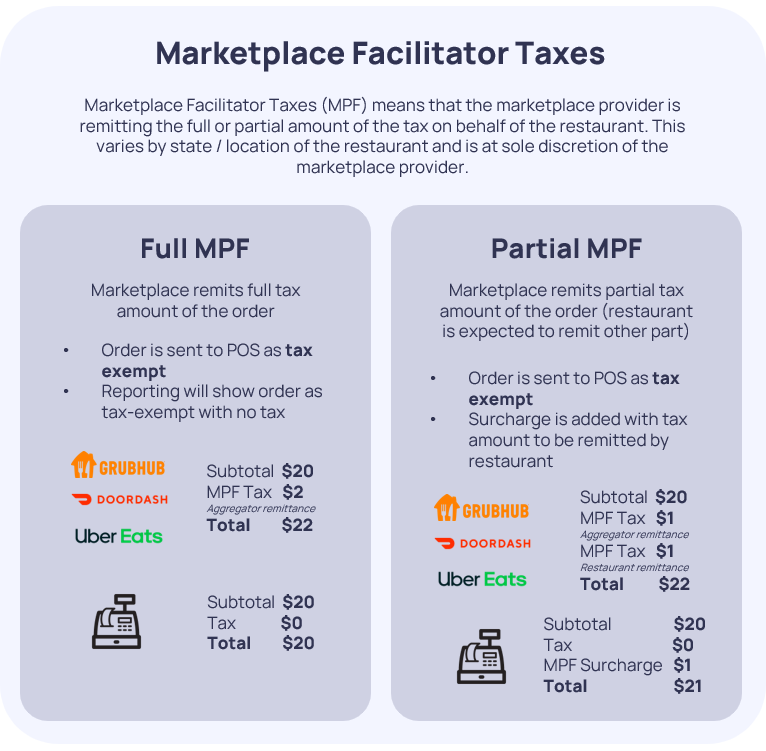
- Full MPF Order: this means the aggregator will pay the full amount of taxes collected in the Order on behalf of the restaurant
- Partial MPF Order: here, the aggregator pays only a portion of the taxes collected in the Order on behalf of the restaurant. The remaining taxes collected by the aggregator in the Order are paid by the restaurant
How does it work?
For both Full and Partial MPF types, our system can replace the POS tax rate with the tax rate retrieved from the aggregator.
To determine whether particular Order is an MPF Order, we check the ‘mpf_tax’ flag in the payload received from the aggregator. If the value of ‘mpf_tax’ exists, the Order is an MPF Order. If the value of ‘mpf_tax’ is NULL, the Order is not an MPF Order.
How are taxes calculated?
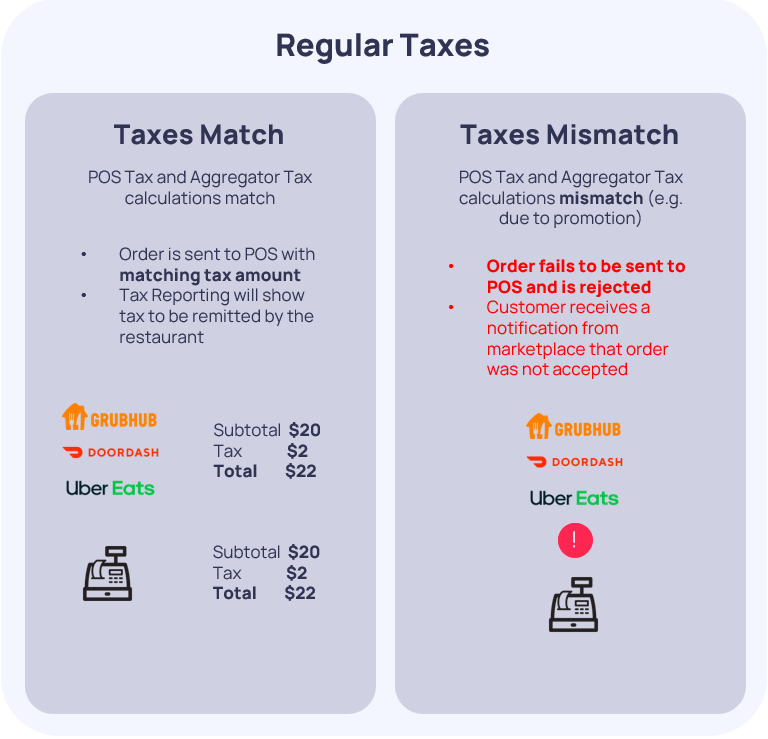
Here's an overview on how taxes calculation works for both Regular and MPF taxes:
|
|
|---|
Which POS support this feature?
This feature is currently supported by:
- PAR POS
- Toast