Product Based Make Time Preparation Strategy
Preparation Strategies in Ordering
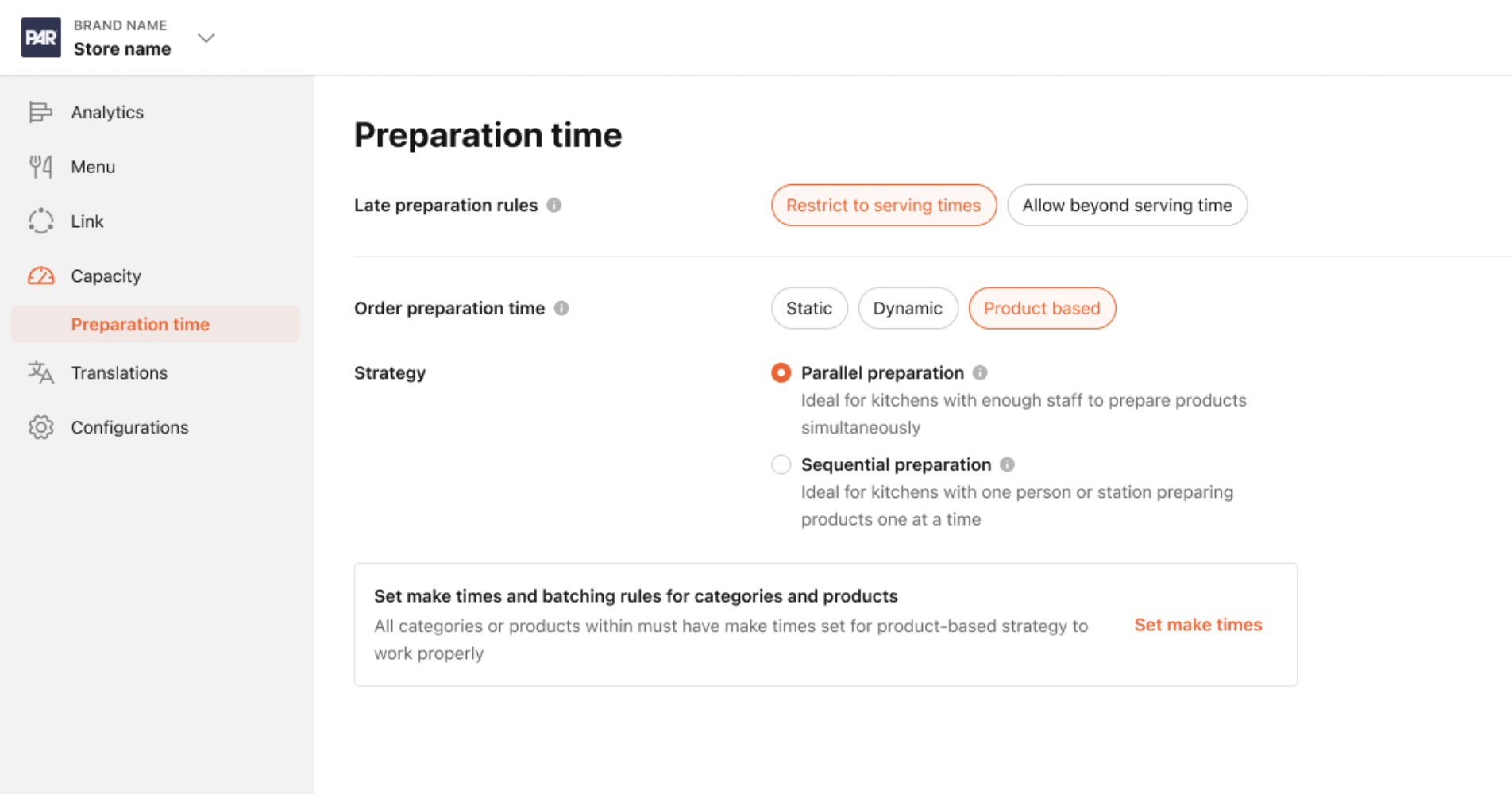
Our platform offers three preparation strategy types to help you align digital ordering with your kitchen operations:
- [Old] Static – A fixed preparation time for all orders.
- [Old] Dynamic – Prep times that adjust based on kitchen conditions.
- [New] Product-based – Flexible prep times tailored to your menu and kitchen setup.
Product-Based Preparation
Product-based preparation gives you the most control and efficiency by letting you configure make times at either the category or individual product level.
- Parallel preparation works best for kitchens with multiple stations, staff, or equipment, allowing items to be prepared at the same time.
- Sequential preparation suits kitchens with a single station or person preparing items one at a time.
You can:
- Apply average make times across a category.
- Set specific make times for individual items that differ from category defaults.
- Configure batch preparation rules to optimize efficiency.
Batch Preparation
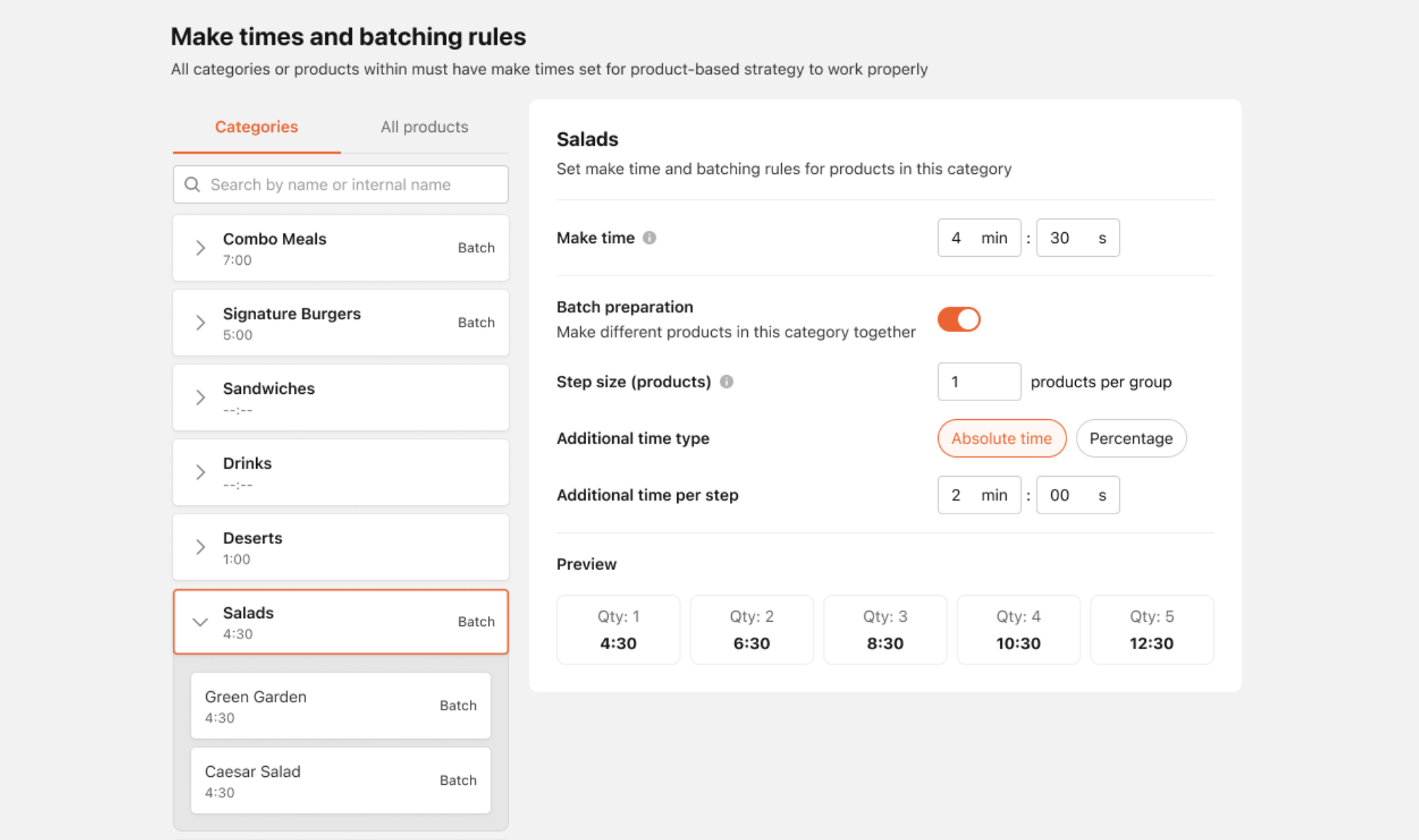
Batching helps reduce inefficiencies in the kitchen. Preparing multiple of the same item together is usually faster than making them one by one.
With batch preparation, you can fine-tune how orders are grouped and timed:
- Step size – Define how many items are grouped (e.g., every 2 burgers).
- Additional time – Choose between percentage-based or fixed time increments per step.
- Preview mode – Visualize how prep efficiency improves as order quantities increase.
Example:
- Base make time: 4 minutes 30 seconds
- Step/ group: 5 salads per batch
- Additional 2 min per step
- Order of 5 salads → 12:30 minutes total
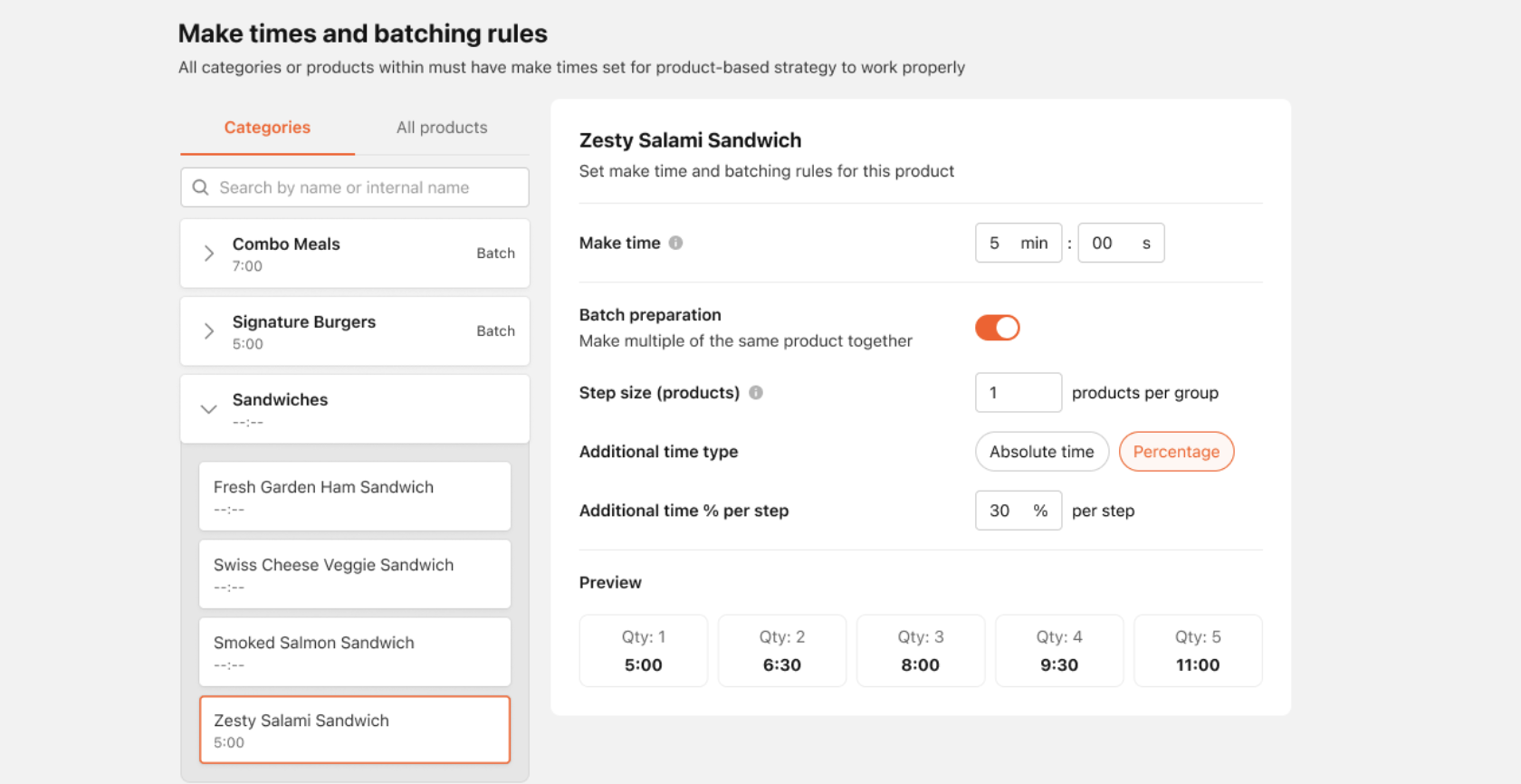
Category makes times also work along side Product specific make times. A product can override any of the above settings if its preparation differs from the category defaults.
Why It Matters
By configuring product-based preparation and batching, your brand can:
- Better align digital ordering with real kitchen capacity.
- Improve consistency and accuracy for customers.
- Reduce bottlenecks and optimize staff efficiency.